
Passport OCR: What It Is and Why It Matters for Your Business
Passport OCR extracts structured JSON from a passport by reading both the Visual Inspection Zone and the ICAO 9303 MRZ, cross-checking them to flag tampering. One parser for 195+ countries.
Every day, people hand passports to banks, hospitals, travel agencies, airlines, and immigration desks. Most of those details still get typed in by hand. Manual entry is slow, scales poorly, and carries real risk of error. Passport OCR removes that step: capture the passport's data page and get every field back as clean, validated JSON in seconds.
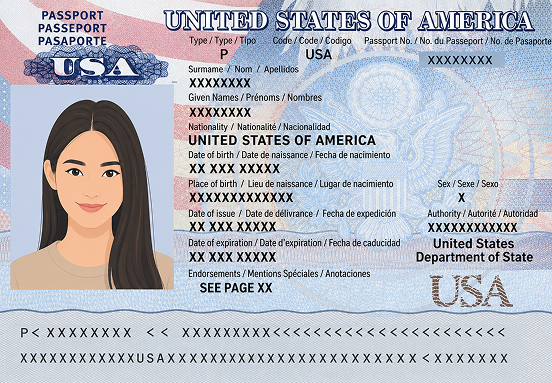
What is passport OCR?
Passport OCR is the extraction of structured data from a passport's data page, the single page that carries the holder's photo, personal details, and the machine-readable zone (MRZ). Taareef reads that one page and returns a predictable JSON object, so your KYC and onboarding checks finish in seconds instead of minutes.
What makes passport OCR robust is that the data page carries the same information twice: once in the Visual Inspection Zone (VIZ), the printed fields you read, and once in the Machine-Readable Zone (MRZ), the two lines of fixed-width text at the bottom of the page. Taareef reads both and cross-checks them.
What Taareef extracts
Taareef returns a consistent JSON object with the passport's core fields:
- passportNumber
- name
- dateOfBirth
- nationality
- sex
- dateOfIssue
- dateOfExpiry
- placeOfBirth
{ "passportNumber": "X12345678", "name": "Jane Doe", "dateOfBirth": "1990-05-20", "nationality": "USA", "sex": "F", "dateOfIssue": "2021-06-15", "dateOfExpiry": "2031-06-14", "placeOfBirth": "California, U.S.A."}Every value is validated against its expected format and cross-checked against the MRZ, so a field that doesn't parse (or doesn't match the machine-readable zone) is flagged rather than passed downstream.
Why the MRZ cross-check matters
The MRZ is what makes tampering visible. It follows the ICAO 9303 standard (a fixed format whose check digits are computed mathematically from the surrounding characters), so the values can be validated on their own. On a forged passport, the printed Visual Zone and the MRZ won't agree, and an engine that cross-checks both will catch it; a weak, single-zone reader won't.
P<USADOE<<JANE<<<<<<<<<<<<<<<<<<<<<<<<<<<<<<
X123456789USA9005201F3106142<<<<<<<<<<<<<<04
Printed zone (VIZ) cross-checked against the MRZ, so a mismatch flags tampering.
Because ICAO 9303 is the same across all 195+ passport-issuing countries (the same structure and Latin transliteration), a single parser handles every passport. One integration covers the world: no country-specific templates, no extra configuration. Whatever the original script (Arabic, Chinese, or any other), names are transliterated into Latin characters in the MRZ, and Taareef normalizes the result into clean, consistent JSON.
How it works
A four-step pipeline powers it (capture, OCR, language processing, and validation), returning structured JSON in under 2 seconds on average, at up to 99.8% accuracy on clear images.
Which industries use passport OCR?
- Banking and financial services. Onboarding has to satisfy KYC rules; passport OCR clears the identity step with a single real-time API call.
- Healthcare. Patient registration by passport OCR removes manual entry at the desk and cuts transcription mistakes, feeding structured, verified data straight into records.
- Real estate and asset management. Tenant verification, lease management, and property services move faster, with an auditable digital record.
- Hospitality. Hotel check-ins take a fraction of the time, with data arriving clean and normalized.
- Government counters. Immigration, visa processing, and civil registration extract and validate data from both the VIZ and the MRZ in seconds.
From OCR to a full KYC check
Because Taareef runs document OCR, face verification, and passive liveness detection through the same endpoint, a passport read can extend into a full identity check that matches the passport photo against a live selfie, with deepfake and spoof protection, without adding a second vendor.
For teams processing at scale, Taareef offers enterprise-grade infrastructure: unlimited volume, on-premise deployment, SSO/SAML, custom model training, and a dedicated account manager.
Frequently asked questions
Ready to integrate?
Get 100 free credits and turn any identity document into structured JSON. One API, 195+ countries, no credit card.
Keep reading
Emirates ID OCR: The Complete Guide to Automated Identity Extraction
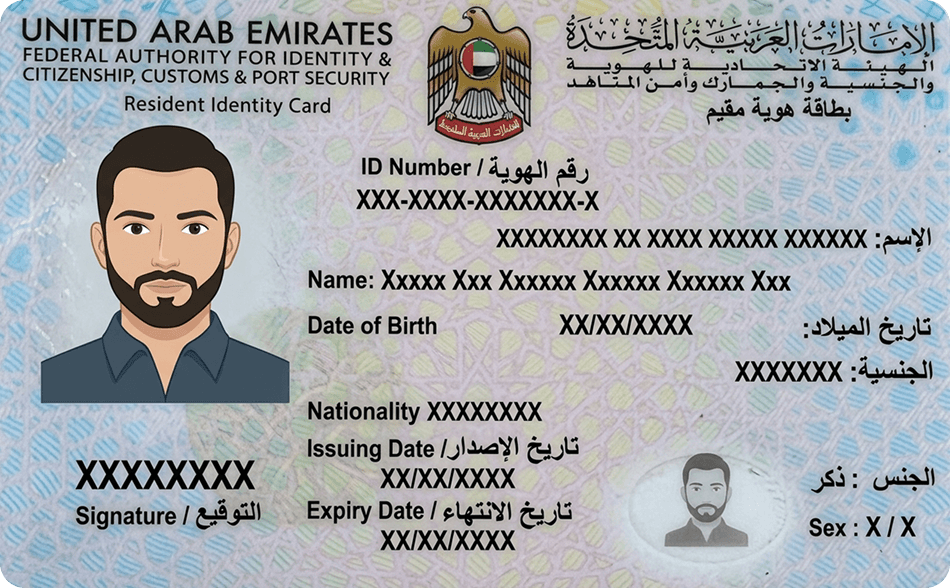
Emirates ID OCR extracts structured JSON from an Emirates ID in seconds: bilingual Arabic/English fields, format validation, and security checks through one API.
Face Dedupe: How to Stop Duplicate Sign-Ups Before They Happen

Face dedupe is a 1:N search that compares every new sign-up's face against every face already enrolled, catching bonus abuse, referral gaming, ban evasion, and KYC re-tries that email, phone, and ID-number checks miss.